Brazil is famous for its football, stunning beaches, vibrant festivals, and warm hospitality. But one of the best ways to truly experience Brazilian culture is through its food.
Across the country, snacks play an important role in everyday life. Whether enjoyed during breakfast, shared with friends over coffee, bought from a street vendor, or served at family celebrations, Brazilian snacks are much more than something to eat between meals—they are part of the country’s identity.
What makes Brazilian food so unique is the blend of influences that shaped it over centuries. Indigenous traditions, African heritage, and European immigration all contributed to creating one of the world’s most diverse cuisines.
If you’re curious about Brazilian food, here are 10 traditional Brazilian snacks you absolutely need to try.
1. Pão de Queijo
No Brazilian snack is more iconic than pão de queijo.
Originating in the state of Minas Gerais during the 18th century, pão de queijo was created when wheat flour was scarce and cooks turned to tapioca starch extracted from cassava, a root vegetable native to South America.
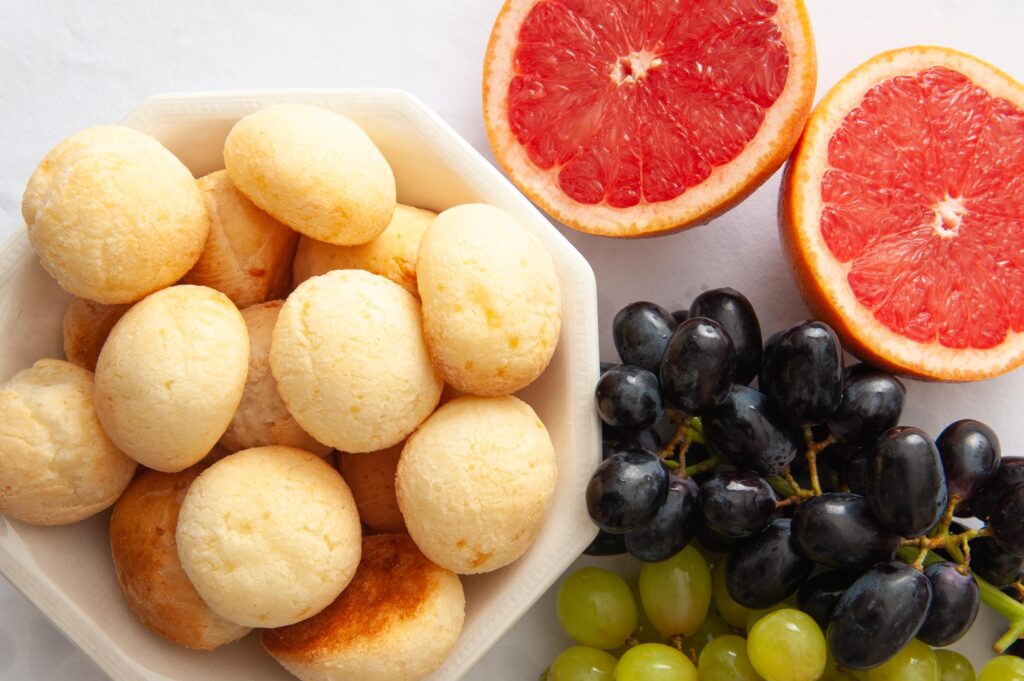
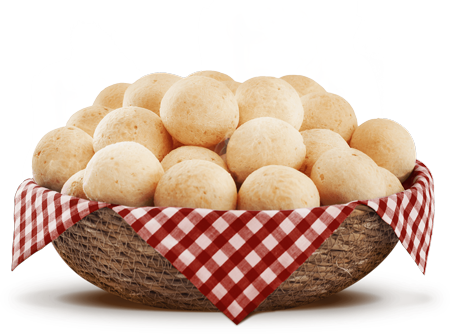
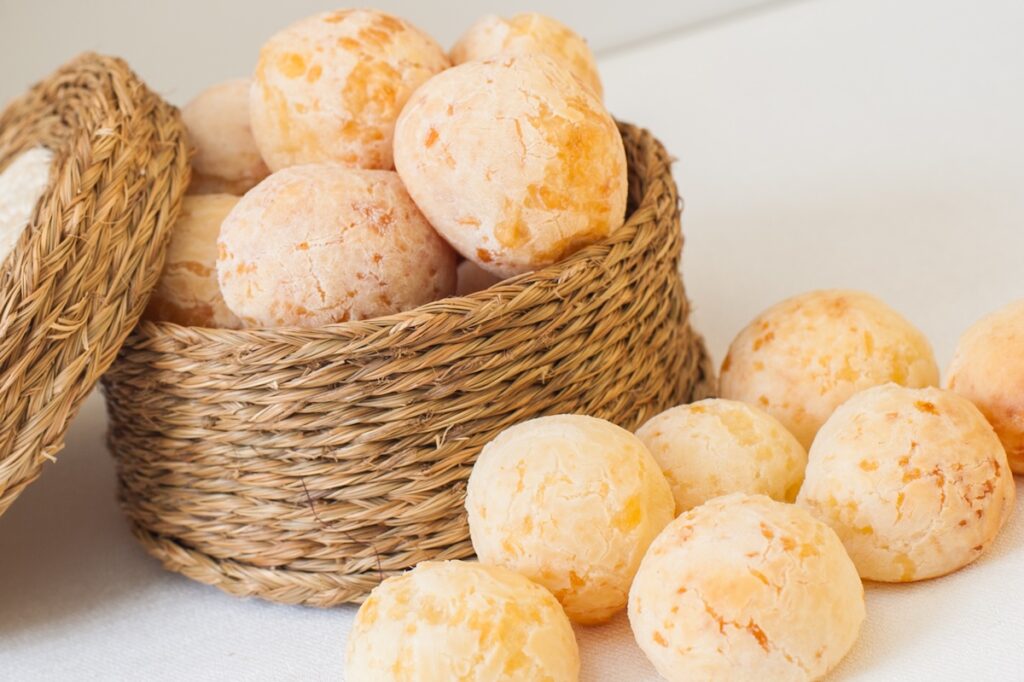
The result is a unique cheese bread with a lightly crispy exterior and a soft, chewy, cheesy centre. Because it’s made with tapioca flour rather than wheat flour, it is naturally gluten free.
Today, pão de queijo is enjoyed throughout Brazil at breakfast, during coffee breaks, and whenever family and friends gather together. It’s one of the country’s most beloved foods and often the first Brazilian snack foreigners fall in love with.
2. Coxinha
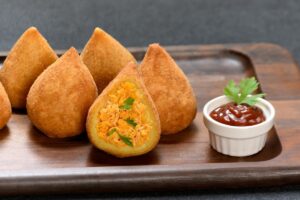
If pão de queijo is Brazil’s most famous baked snack, coxinha is its most famous fried one.
Legend has it that coxinha was created for a young prince who would only eat chicken drumsticks. To satisfy him when drumsticks were unavailable, a cook shredded chicken meat, wrapped it in dough, and shaped it like a chicken leg.
Whether the story is true or not, the snack became incredibly popular across Brazil.
A traditional coxinha consists of shredded chicken wrapped in a soft dough, coated in breadcrumbs, and fried until golden brown. Many modern versions also include creamy Catupiry cheese, making it even more irresistible.
3. Pastel
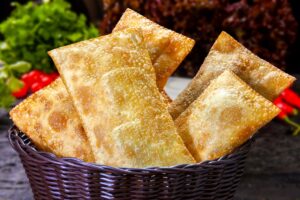
A visit to a Brazilian street market isn’t complete without a freshly fried pastel.
Made from a thin pastry dough and filled with ingredients such as cheese, beef, chicken, or heart of palm, the pastel is fried until perfectly crispy and golden.
Sweet versions are also popular, featuring fillings such as chocolate, banana, or guava paste.
Many Brazilians would argue that the ultimate street food experience is enjoying a hot pastel alongside a glass of freshly pressed sugarcane juice while strolling through a weekend market.
4. Brigadeiro
Brazil’s favourite sweet snack has a surprisingly political origin.
The brigadeiro was created in the 1940s during the presidential campaign of Brigadeiro Eduardo Gomes. Supporters sold the chocolate sweets to raise funds, and the recipe quickly became a national favourite.
Made from condensed milk, cocoa powder, and butter, brigadeiros are rolled into small balls and covered with chocolate sprinkles.
Today, no Brazilian birthday party feels complete without them. They’re simple, delicious, and loved by children and adults alike.

5. Tapioca
Long before European settlers arrived in Brazil, Indigenous communities were already using cassava to create foods that remain popular today.
One of the best examples is tapioca.
Made from hydrated tapioca starch cooked on a hot griddle, tapioca resembles a thin pancake and can be filled with countless sweet or savoury ingredients.
Popular fillings include cheese, chicken, coconut, chocolate, and condensed milk. It’s commonly enjoyed for breakfast or as a light afternoon snack and has become increasingly popular worldwide thanks to its naturally gluten-free properties.

6. Acarajé
Acarajé is one of Brazil’s most culturally significant street foods.
Originating in the northeastern state of Bahia, this deep-fried snack is made from black-eyed peas and cooked in red palm oil known as dendê.
Its roots trace back to West Africa, reflecting the enormous influence African culture has had on Brazilian cuisine.
Traditionally sold by women dressed in white known as Baianas, it was officially recognised as part of Brazil’s cultural heritage in 2004.

7. Pamonha
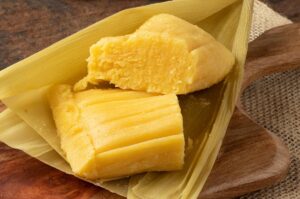
Pamonha is a beloved Brazilian snack made from fresh corn.
Popular throughout rural Brazil and especially during the traditional June Festivals (Festas Juninas), pamonha is prepared by grating corn, mixing it with other ingredients, wrapping it in corn husks, and boiling it.
It can be either sweet or savoury.
Sweet versions often contain sugar and cinnamon, while savoury varieties may include cheese or sausage. Its comforting flavour and connection to rural traditions make it a favourite across generations.
8. Açaí
Originally from the Amazon region, açaí has become one of Brazil’s most famous exports.
The small purple berry has been consumed by Indigenous communities for centuries and remains an important part of Amazonian cuisine.
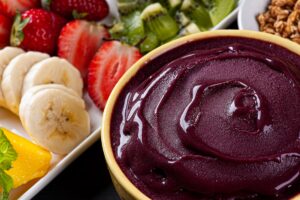
In many parts of Brazil, particularly along the coast, açaí is served frozen and blended into a thick bowl topped with granola, banana, strawberries, and other fruits.
Refreshing, delicious, and versatile, it’s become a favourite snack for athletes, students, and anyone looking for something cool on a hot day.
9. Bolo de Rolo
Bolo de rolo is one of Brazil’s most elegant traditional desserts.
Originating in the northeastern state of Pernambuco, it was inspired by Portuguese rolled cakes but evolved into something uniquely Brazilian.
The dessert consists of extremely thin layers of cake rolled together with guava paste, creating a beautiful spiral pattern when sliced.
Making a traditional bolo de rolo requires remarkable skill and patience, which is why it is considered one of Brazil’s most treasured regional delicacies.
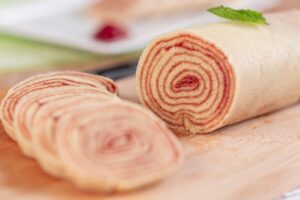
10. Romeu e Julieta
Sometimes the simplest combinations are the most memorable.
Romeu e Julieta—known in English as Romeo and Juliet—is the name Brazilians give to the pairing of cheese and guava paste.
The combination became so popular that it was named after Shakespeare’s famous couple because the two ingredients are considered a perfect match.
The creamy, slightly salty flavour of the cheese balances beautifully with the sweetness of the guava paste. You’ll find this pairing in cakes, pastries, desserts, and even stuffed inside pão de queijo.

Why Brazilian Snacks Are So Special
Brazilian snacks tell the story of Brazil itself.
From Indigenous ingredients like cassava and açaí to African influences found in acarajé and European traditions reflected in desserts such as bolo de rolo, every snack represents a chapter of the country’s cultural history.
They’re also incredibly diverse. Some are sweet, others savoury. Some are enjoyed at breakfast, while others are found at street markets, beaches, festivals, and family celebrations.
Together, they showcase the creativity, hospitality, and cultural richness that make Brazilian cuisine so unique.
Start Your Brazilian Food Journey with Pão de Queijo
If you’re discovering Brazilian food for the first time, there’s no better place to start than with pão de queijo.
Its crispy exterior, soft cheesy centre, and naturally gluten free recipe make it one of the most accessible and loved Brazilian snacks.
At Mary & Bella, we’re proud to bring authentic Brazilian cheese bread to homes across the UK. Simply keep a bag in the freezer, bake when needed, and enjoy a taste of Brazil whenever you like.
Because every great food journey has to start somewhere—and pão de queijo is a delicious place to begin.